
CHAP Celebrates 60 Years in Home-Based Care
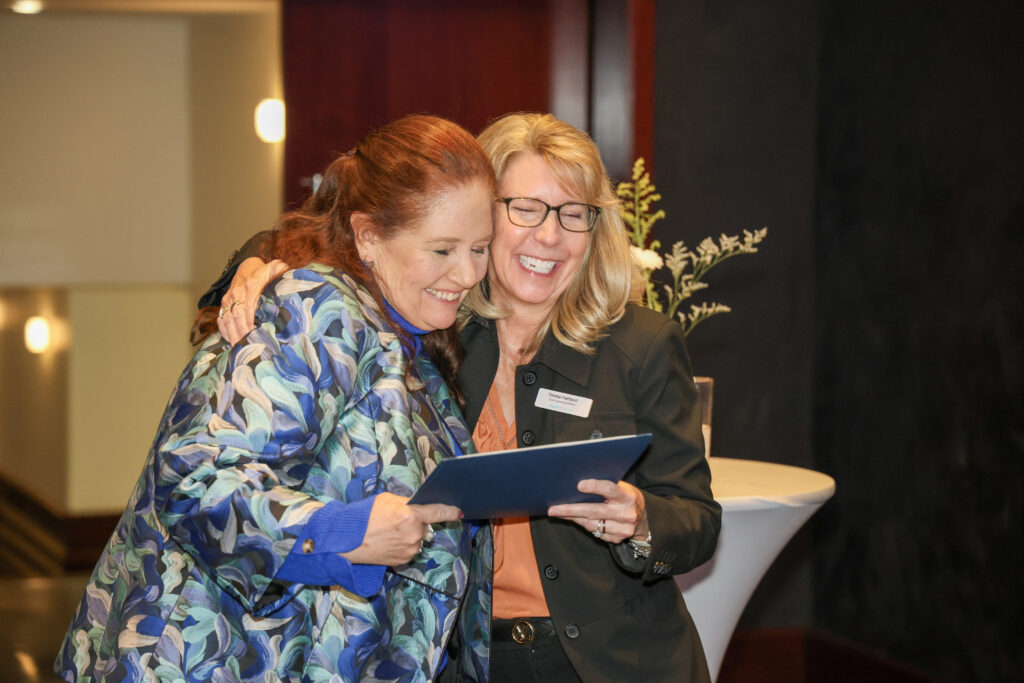
This year, CHAP marked a milestone that speaks volumes about our legacy and our future: our Diamond Jubilee. Sixty years of progress, partnership, and innovation came to life as our incredible team gathered to celebrate not just an anniversary, but the people who make our mission possible every day. It was a moment to honor the tradition that began in 1965 and continues to shape home-based care across the nation; a tradition built on excellence, compassion, and a shared commitment to the providers we serve.
As we reflected on six decades of impact, the celebration reminded us of something even more powerful: the strength of our present and the promise of what’s next. Surrounded by colleagues who inspire us daily, we celebrated achievements big and small, and reaffirmed our role as trusted partners for providers.
With this amazing group of people leading the way, CHAP is ready to help build the future of home-based care, one that honors our past while embracing innovation for generations to come.





CHAP’s 60 Year History
Home. It represents safety, comfort, and family support for most individuals. So, it is not surprising that given the choice, people would rather receive healthcare wherever they call home versus a hospital or other medical facility. The majority of today’s older adults state they wish to age in place and receive health services at home, if possible, surrounded by the familiar places, people, and things they hold dear.
Providing home-based healthcare is common today and is predicted to be more so in the future with the advent of hospital at home demonstration models and increased home care services. Historically, home-based healthcare was the standard approach before the rise of modern hospitals in the nineteenth and twentieth centuries. Physicians often traveled to patients’ homes, carrying their medical bags and providing care directly where people lived. With medical advancements and urbanization, care gradually shifted to centralized hospitals and clinics, but recent trends are reviving the tradition of treating individuals in their homes. Today’s technology, along with innovative care models, is making it easier than ever to deliver quality healthcare at home, reflecting a return to patient-centered practice that prioritizes comfort and familiarityi.
The Community Health Accreditation Program (CHAP) has been supporting the provision of high-quality home-based care since 1965 by only accrediting organizations who provide care to individuals in the home, and we are proud to celebrate 60 years as a pioneer for care in the community. CHAP was established as a groundbreaking joint initiative between the American Public Health Association (APHA) and the National League for Nursing (NLN) . This collaboration created the first-ever accrediting body for home and community-based health care organizations in the United States, addressing a critical gap in health care quality oversight .
1965 Healthcare Landscape
The mid-1960s marked a period of transformative change in American health care. Notably, in July 1965 the U.S. Congress created Medicare and Medicaid (via amendments to the Social Security Act), dramatically expanding access to medical services for seniors and low-income populations . Home health care emerged as an essential component of these new programs, since Medicare for the first time provided funding for home health services for the elderly . At the same time, health care leaders grew concerned about how to ensure quality of care outside hospital walls.
Prior to CHAP’s founding, formal accreditation in healthcare was largely limited to hospitals. The Joint Commission on Accreditation of Hospitals (JCAH, now The Joint Commission) had been inspecting hospitals since the 1950s, but it did not extend accreditation to home care providers until much later (its Home Care Accreditation program began only in 1988). This meant that in 1965, no standardized accreditation or review system existed for home health agencies and community nursing services.
After World War II, outpatient and community care increased, and public health nursing expanded, resulting in thousands of visiting nurse associations and agencies providing home care. With the injection of federal funding (Medicare/Medicaid), these services were poised to grow even further. However, the absence of common quality standards and evaluation mechanisms for home care was a serious concern to public health and nursing leaders.
Both APHA and NLN recognized a “burgeoning need for standardized, high-quality home health services” . The goal was to protect patients and ensure effectiveness in this rapidly evolving sector. Just as hospitals had benefitted from accreditation to drive improvements, community-based providers needed a way to evaluate and improve their care delivery. In an internal retrospective, CHAP later noted that its birth “coincided with broader healthcare reforms of the era, including the establishment of Medicare and Medicaid,” underscoring how these 1965 policy changes helped create an environment ripe for a home-care accreditation program .
APHA and NLN Initiative
APHA and NLN formally co-sponsored the accreditation program from the start . The program was overseen by a joint committee known as the Council of Home Health Agencies and Community Health Services, which drew on both organizations’ expertise . According to archival records, this council was a cooperative effort of NLN and APHA dedicated to home care services accreditation . In practice, NLN housed and administered the program through its Division of Accreditation Services, while APHA provided policy guidance and a public health perspective .
Home health agencies could voluntarily choose to seek CHAP accreditation – but it quickly became a mark of distinction. Achieving CHAP accreditation signified that an agency met nationally recognized standards of quality, which was valuable for public credibility and, later, for meeting certain regulatory requirements . In effect, CHAP provided a framework for agencies to continuously improve. According to a 1983 NLN/APHA pamphlet, the accreditation was “unique in its design and purpose” and open to all types of providers (visiting nurse associations, public health departments, hospital-based home care, and private agencies alike) . This inclusive approach helped spread best practices across the spectrum of community health services.
By the mid-1970s, dozens of agencies nationwide were CHAP-accredited, and by 1983 the number had risen to 105 . These early adopters of CHAP accreditation demonstrated the feasibility and value of the process, leading more organizations to seek accreditation.
CHAP’s Position as the First Accreditor in Community-Based Care
It cannot be overstated that CHAP was pioneering. “Created in 1965… CHAP was the first accrediting body for home and community-based health care organizations in the United States,” as noted in multiple histories . For more than two decades, CHAP remained the sole accreditor dedicated exclusively to community-based care. This gave it a unique leadership position. No other national accreditation program specifically for home care existed in the 1960s – government oversight of home health agencies was minimal before Medicare, and private accreditation was nonexistent. CHAP filled this void, much as the founders intended, by “recognizing the need and value for accreditation in community-based care” ahead of others9.
Home care providers and policymakers recognized CHAP accreditation as a mark of excellence. CHAP set the precedent that community-based services could and should be held to high standards similar to hospitals. The fact that CHAP focused solely on home and community-based care gave it unmatched depth in that field. As one account notes, “Meeting CHAP’s requirements is the same as satisfying the CMS \Medicare] standards,” a testament to how CHAP’s standards became the de facto benchmark over time[9. APHA’s involvement meant that community health outcomes and preventive care were woven into the standards, not just clinical nursing tasks. Continuous improvement was a built-in philosophy – an approach pioneered by CHAP that predated the broader healthcare industry’s emphasis on quality improvement in the 1980s .
CHAP’s early start gave it a leadership position that influenced others. When the Joint Commission eventually expanded into home care accreditation in the 1980s, and when other groups (like ACHC – Accreditation Commission for Health Care, founded 1986) came onto the scene, CHAP had already been setting standards for two decades. In that sense, CHAP’s founding in 1965 paved the way for the concept of independent accreditation in all sectors of healthcare – showing that even outside hospital walls, external review could drive quality. Public health historians often cite CHAP as an example of proactive professional self-regulation: an industry (community nursing and public health agencies) voluntarily raising the bar before government mandate. This model of accreditation as quasi-voluntary but highly valued became common in many areas of healthcare in subsequent years .
The founding mission – “to advance the highest quality of home and community-based care” – has remained essentially intact since 1965. CHAP’s current mission statement uses modern language but echoes the original goals . From the start, CHAP positioned itself not as a punitive inspector but as an “essential partner” to agencies, helping them achieve excellence (this is reflected even in CHAP’s updated name, Community Health Accreditation Partner, adopted later). The collaborative, improvement-oriented spirit can be traced right back to APHA and NLN’s vision in 1965 of partnering with providers to uplift care standards.
From the foundation laid in 1965, CHAP grew into the role of essential accreditor for home health and hospice. It influenced policy (e.g., being written into Medicare regulations by 1990s) and helped thousands of organizations improve their care delivery. The fact that CHAP was “the first to recognize the need for accreditation in community-based care” is reflected in its enduring presence and reputation. Today’s CHAP – now the Community Health Accreditation Partner – still carries forward the mission conceived in 1965: “to advance the highest quality of home and community-based care” , a direct legacy of its visionary founders.
The founding of CHAP in 1965 stands as a significant milestone in U.S. healthcare history and was a forward-looking response to the challenges and opportunities of the era. By establishing the first home care accreditation program in the U.S., APHA and NLN ensured that as healthcare moved beyond hospital walls, quality would remain at the forefront. The partnership they forged and the program they built set the standard for community health accreditation, with impacts that have resonated through the decades .